
Ethiositer.com
Agriculture Sector Ethiopia
September 13, 2026 (FMC) — Prime Minister Abiy Ahmed underscored Ethiopia’s shift from dependence on imported wheat to self-sufficiency and its expanding pharmaceutical manufacturing as
AGRICULTURE NEWS HIGHLIGHTS


Oct 05, 2026 - ethiositer.com
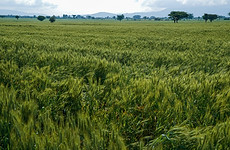
Addis Ababa, October 5, 2026 (FMC) — For years, Ethiopia spent up to one billion US dollars annually to import wheat to meet domestic demand—a striking paradox for a country endowed with vast agricultural land, abundant water resources and a large rural workforce capable of producing at scale. The more profound problem was not simply the foreign exchange leaving the country. It was the gap between what Ethiopia possessed and what it was able to produce.
Closing that gap has become one of the clearest demonstrations of Ethiopia’s evolving capacity to turn national potential into measurable economic output. Through a combination of irrigation expansion, agricultural mechanization, improved seed varieties, coordinated production, strengthened extension . . . .
Oct 03, 2026 - ethiositer.com
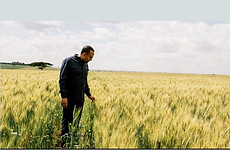
Addis Ababa, October 3, 2026 (FMC) — Kenyan tourist Yusuf Dibam has praised Prime Minister Abiy Ahmed’s leadership, saying it is helping transform the mentality of Africa and changing how Africans perceive the continent’s potential.
Speaking exclusively to Fana Digital at the Hora Finfinne Irreecha celebration in Addis Ababa, Dibam said his repeated visits to the Ethiopian capital had enabled him to witness significant changes.
“I’ve been here four times. The first time I came, it was not this much developed. The second time, it’s more developed,” he said, adding that he now regards Addis Ababa as a major African destination.
Dibam directly linked what he described as a broader shift in African outlook to the leadership of Prime . . . .
Oct 01, 2026 - ethiositer.com
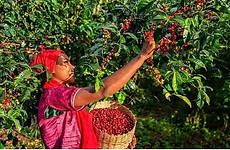
Addis Ababa, October 1, 2026 (FMC) — As the world marks International Coffee Day, Ethiopia stands at the heart of a global coffee story that connects ancient traditions, millions of livelihoods and a rapidly evolving international industry.
Widely recognized as the birthplace of coffee, Ethiopia has cultivated a distinctive coffee culture in which the bean is far more than an agricultural commodity.
Coffee is deeply woven into the country’s social traditions, with the Ethiopian coffee ceremony serving as a longstanding expression of hospitality, community and cultural identity.

Oct 03, 2026 - ethiositer.com
Addis Ababa, October 1, 2026 (FMC) — Somewhere between the highlands where coffee ripens, the fields where wheat now grows through the dry season and the landscapes being brought back to productivity, Ethiopia’s agricultural story has begun to change its direction.
For generations, the country’s enormous agricultural potential has lived alongside a difficult contradiction: abundant land, water and human capacity on one side, and vulnerability to rainfall variability, productivity gaps, food imports and underdeveloped value chains on the other.
That equation is now being challenged.

sept 30, 2026 - ethiositer.com
Addis Ababa, September 30, 2026 (FMC) — Ethiopia and Japan have signed a 360-million-yen grant agreement, equivalent to approximately 375 million birr, to support the modernization of Ethiopia’s rice sector through agricultural mechanization.
The agreement was signed by Minister of Finance Ahmed Shide, Ambassador of Japan to Ethiopia Shibata Hironori, representing the Government of Japan, and Hiroyuki Yakushi, Chief Representative of the Japan International Cooperation Agency (JICA) Ethiopia Office.
The grant will finance the provision of essential agricultural machinery, including combine harvesters, tractors, rice-milling machines and land-preparation equipment.
sept 28, 2026 - ethiositer.com
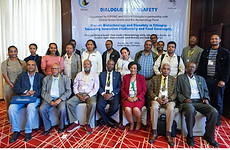
Addis Ababa, September 28, 2026 (FMC) — Ethiopia’s efforts to benefit from modern biotechnology must go hand in hand with safeguarding biodiversity, farmers’ rights, human health, seed diversity and food sovereignty, ESFSAC Executive Director Dr. Bayush Tsegaye said, framing the central question at a national dialogue on biotechnology and biosafety held in Addis Ababa.
The dialogue, held under the theme “Biosafety and Modern Biotechnology: Balancing Innovation, Biodiversity and Food Sovereignty,” brought together government officials, researchers, academics, civil society organizations, farmers, development partners and other stakeholders to examine the opportunities, challenges and governance . . . .

sept 24, 2026 - ethiositer.com
Ethiopia’s Meskerem Magic: A Month Of Festivals, Cultural Splendor And Warm Welcome Awaits The World
Addis Ababa, September 24, 2026 (FMC) — As Meskerem unfolds across Ethiopia, the country enters one of its most vibrant stretches of the year — a season when a new year begins amid fresh blooms, ancient traditions, colorful celebrations and a calendar rich with occasions that invite the world to experience Ethiopia from within.
For international visitors, Meskerem is more than the first month of the Ethiopian calendar.
It is a passage into a country where history and living culture meet in streets, squares, villages and sacred spaces; where celebrations carry memories across generations; and where hospitality remains an essential part of the Ethiopian experience.
sept 24, 2026 - ethiositer.com
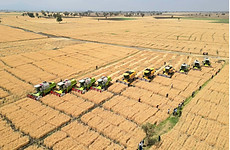
Addis Ababa, September 24, 2026 (FMC) — Ethiopia’s transformation from a wheat-importing country into one of Africa’s largest wheat producers is demonstrating the continent’s capacity to strengthen its own food security, President Taye Atske-Selassie told the 81st United Nations General Assembly.
Addressing the General Assembly in New York, President Taye highlighted Ethiopia’s rapid progress in wheat production, supported by the introduction and expansion of climate-resilient wheat varieties.
He presented the transformation against a backdrop of growing pressure on global food systems, where access to food has increasingly become a strategic concern and disruptions to supply chains can have consequences far beyond national borders.
sept 23, 2026 - ethiositer.com
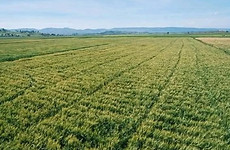
Addis Ababa, September 23, 2026 (FMC) – There was a time when Ethiopia’s agricultural map seemed almost immutable.
The highlands belonged to crops suited to cooler climates. The lowlands carried a different agricultural logic. Rainfall drew another boundary. Pastoralism occupied vast spaces where crop cultivation appeared difficult or impractical. Altitude, heat and water availability quietly dictated what could be grown, where it could be grown and how many times a year the land could be productive.
Those boundaries are beginning to loosen.
sept 30, 2026 - ethiositer.com
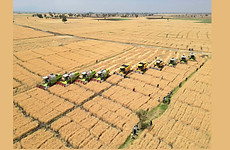
Addis Ababa, September 21, 2026 (FMC) — A tonne of wheat grown at home can mean more than food in a national silo. It can mean foreign currency retained, pressure eased on the import bill and a little more room for a country to finance its own priorities.
A tonne of coffee exported can bring in the hard currency needed to pay for machinery, fuel, medicine and the technologies that domestic production still requires.
This is the economic story increasingly taking shape in Ethiopian agriculture: the sector is being repositioned not only as a source of food and rural livelihoods, but also as an instrument of foreign-exchange conservation, export expansion and wider economic transformation.
sept 22, 2026 - ethiositer.com
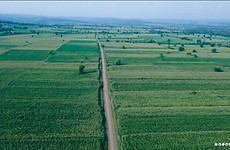
Addis Ababa, September 22, 2026 (FMC) – For decades, a narrow set of images came to define Ethiopia for much of the outside world: drought-stricken landscapes, famine, emergency relief, poverty and people waiting for assistance.
Those realities were never the whole country. But they became powerful shorthand for it.
Something more complicated is now emerging.
Across Ethiopia, a different collection of images is increasingly competing for attention: wheat fields stretching across irrigated lowlands, coffee moving into premium global markets, millions of seedlings . . .
sept 21, 2026 - ethiositer.com
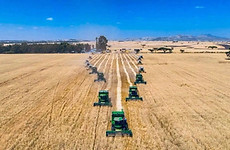
Addis Ababa, September 21, 2026 (FMC) — For much of the modern era, Ethiopia entered the global food conversation from the wrong end of the equation.
Its name was repeatedly associated with famine, drought, food shortages and appeals for assistance. The country’s agricultural potential was immense, yet the distance between potential and production remained one of the defining constraints on its development.
That equation is now being challenged—not by rhetoric, but by a widening body of production, irrigation, mechanization, diversification and environmental restoration that is changing the scale and direction of Ethiopia’s agricultural story.
sept 21, 2026 - ethiositer.com
Addis Ababa, September 21, 2026 (FMC) — Some agricultural transformations are measured in harvests. Others are measured in the number of assumptions they force an entire sector to reconsider.
Across Ethiopia, an increasingly important experiment has been unfolding not inside a single research station or demonstration plot, but across millions of hectares: what happens when improved varieties, irrigation, mechanization, cluster farming, extension systems, climate information and new production practices are taken from the laboratory and pushed toward national scale?
The answer is beginning to reshape the country’s agricultural trajectory—and to attract attention well beyond its borders.
sept 15, 2026 - ethiositer.com
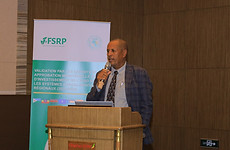
Addis Ababa, September 15, 2026 (FMC) — The Intergovernmental Authority on Development (IGAD) has begun finalizing a decade-long regional investment and policy framework aimed at transforming agrifood systems across the Horn of Africa, with experts and policymakers stressing coordinated investment, stronger seed systems and climate resilience as critical to confronting persistent food insecurity.
The three-day meeting, which opened in Addis Ababa today, is conducting the final expert validation of the IGAD Regional Agrifood Systems Investment Plan (RASIP) 2026–2035 ahead of its ministerial endorsement, alongside preparations for the endorsement of the IGAD Regional Seed Policy and Regulatory Framework.

sept 13, 2026 - ethiositer.com
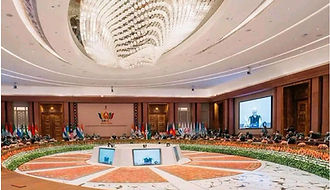
Addis Ababa, September 13, 2026 (FMC) — Prime Minister Abiy Ahmed underscored Ethiopia’s shift from dependence on imported wheat to self-sufficiency and its expanding pharmaceutical manufacturing as evidence of a central resilience principle he advanced at the 18th BRICS Leaders’ Summit: “Preparedness requires production.”
Addressing BRICS leaders in New Delhi, Prime Minister Abiy said the summit’s theme of resilience, innovation, cooperation and sustainability speaks directly to a time when shocks rarely come alone, with disruption in one area quickly affecting another.
“That’s why resilience must be built before a crisis. And it has to be part of how we govern,” he said,

sept 03, 2026 - ethiositer.com
Addis Ababa, September 3, 2026 (FMC) — Ethiopia is positioning sorghum as a strategic investment frontier for agricultural transformation, with policymakers, investors and development partners exploring opportunities to build a competitive value chain spanning production, processing, trade and agro-industry at the Africa Food Systems Forum (AFSF) 2026 in Kigali, Rwanda.
Opening the investment-focused session, AGRA Ethiopia Country Director Dr. Yihenew Zewdie highlighted the National Sorghum Flagship Programme as a platform for connecting Ethiopia’s agricultural potential with capital, enterprise, technology and markets.

sept 03, 2026 - ethiositer.com
Addis Ababa, September 3, 2026 (FMC) — Former Ethiopian Prime Minister and Board Chair of AGRA, CGIAR, TradeMark Africa and the AFS Forum Partners Group, Hailemariam Dessalegn, has called for Africa to turn its vast livestock wealth into greater economic opportunity through increased investment, stronger market linkages and value addition.
Hailemariam made the call at a high-level side event convened by the Hailemariam & Roman Foundation (HRF) on the margins of the Africa Food Systems Forum (AFSF) 2026 in Kigali, Rwanda, focusing on “Transforming Africa’s Livestock Economy: Market Linkages, Value Addition and Inclusive Growth.”

sept 02, 2026 - ethiositer.com
Addis Ababa, September 2, 2026 (FMC) — Ethiopia generated more than $4.55 billion in export earnings from agricultural products during the 2025/26 fiscal year, underscoring the sector’s growing role in foreign-exchange generation and the country’s efforts to expand agricultural production and access international markets, the Ministry of Agriculture said.
The ministry said the performance was supported by expanded cultivation, increased agricultural productivity and growing output across crop and livestock subsectors. A total of 33 million hectares was covered by various crops, producing 1.85 billion quintals during the fiscal year.
Aug 25, 2026 - ethiositer.com
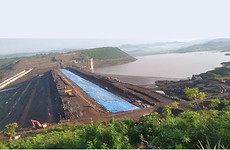
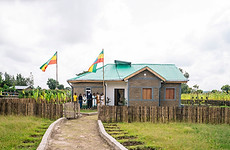
Addis Ababa, August 25, 2026 (FMC) — The Megech Irrigation Development Project in Central Gondar Zone of Ethiopia’s Amhara region, near the giant Lake Tana, has reached 94 percent completion, marking a major turnaround for a project that remained stalled for years and was once considered virtually defunct, according to the Ministry of Irrigation and Lowlands.
The project is now advancing rapidly, with the remaining works expected to be completed within the coming few months, according to Ashenafi Likasa, Head of the Irrigation Projects Office at the Ministry of Irrigation and Lowlands.
Aug 21, 2026 - ethiositer.com
Addis Ababa, August 21, 2026 (FMC) — Across Ethiopia, a new rural development story is taking shape—one in which the measure of progress is moving beyond the buildings, roads and facilities that rise from the ground to the changes they bring to the people who live around them.
The vision was reaffirmed by the Office of the Prime Minister today, emphasizing that rural development must ultimately be judged by how people’s lives change as a result. At the center of this approach is the Rural Corridors Initiative, which seeks to improve connectivity, create better living conditions and unlock economic opportunities within rural communities.
Aug 17, 2026 - ethiositer.com
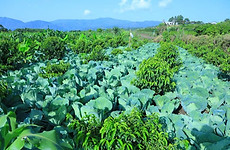
Addis Ababa, August 17, 2026 (FMC) — Ethiopia’s Deputy Prime Minister Temesgen Tiruneh has applauded farmers around Haik town in South Wollo Zone of the Amhara Region for transforming farmland once devoted to khat cultivation into thriving fruit and vegetable production clusters.
In a social media post following his visit to the area, Temesgen said the farmers had demonstrated the value of identifying their locality’s agricultural potential and shifting toward more profitable and sustainable production in line with the country’s development direction.
In Gobeya Kebele of Tehuledere Woreda, he said, farmland has been transformed into fruit and vegetable clusters, describing the development as a valuable contribution to Ethiopia’s ongoing drive for food ....
Aug 10, 2026 - ethiositer.com
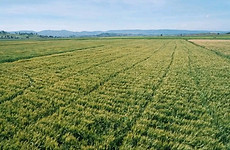
Addis Ababa, August 10, 2026 (FMC) — Ethiopia’s drive to transform agriculture is increasingly shifting production away from dependence on rainfall, with major irrigation development underway in Oromia and notable results already emerging in Borena and Bale zones, Prime Minister Abiy Ahmed said.
Speaking in the second episode of his interview with local media OBN, aired on Fana Media Corporation (FMC) platforms last night, the Prime Minister cited irrigation development in Oromia among the major economic reforms being implemented across the country.
Aug 05, 2026 - ethiositer.com
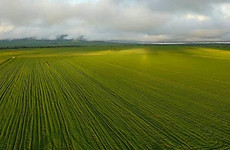
Addis Ababa, August 5, 2026 (FMC) — For generations, Ethiopian agriculture has carried two contrasting identities. It has been celebrated as the foundation of one of the world’s oldest agricultural civilizations, yet it has also been defined internationally through narratives of vulnerability, climate shocks and food insecurity.
Today, a new chapter is being written in Ethiopia’s fields.
The transformation underway is not simply about increasing harvest volumes or introducing new farming technologies. It represents a deeper shift in how agriculture is understood, organized and positioned within national development. Ethiopia is moving toward a new agricultural paradigm where productivity, . . . .

July 29, 2026 - ethiositer.com
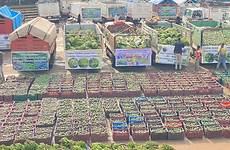
Addis Ababa, July 29, 2026 (FMC) — What began as millions of seedlings planted across Ethiopia’s landscapes is now growing into a new chapter of agricultural transformation, with fruits nurtured under the Green Legacy Initiative making their way to global markets and creating new economic opportunities.
Ethiopia’s Green Legacy Initiative is increasingly demonstrating that environmental restoration can serve as a foundation for economic growth, food security and regional cooperation. Beyond expanding forest coverage and strengthening climate resilience, the initiative is helping transform the country’s agricultural sector by promoting high-value crops with growing demand in international markets.
July 26, 2026 - ethiositer.com
Addis Ababa, July 26, 2026 (FMC) — Ethiopia’s Green Legacy Initiative is increasingly demonstrating that environmental action can deliver tangible economic outcomes, as trees planted under the flagship national campaign are now supporting food production, creating market opportunities, improving rural livelihoods, and contributing to the country’s export ambitions.
Jimma Zone in the country’s Oromia region stands as a testament to this evolving impact, with avocado trees cultivated through the Green Legacy Initiative now entering production and connecting environmental restoration efforts with domestic supply chains, agro-industrial development and international markets.
July 19, 2026 - ethiositer.com
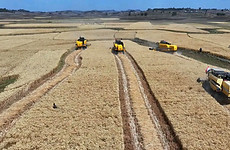
Addis Ababa, July 19, 2026 (FMC) — Ethiopia’s agriculture sector has reached a new milestone, with the country harvesting 1.3 billion quintals of agricultural produce during the 2025/26 fiscal year, Minister of Agriculture Addisu Arega said.
The East African country’s Ministry of Agriculture and heads of relevant institutions reviewed the implementation of the sector’s annual plan, highlighting major achievements recorded in crop production, agricultural exports, input supply, mechanization, and livestock development.
Presenting the sector’s performance, Addisu said significant progress was registered during the fiscal year, with 29 million hectares of land cultivated and 1.3 billion quintals of produce harvested.
July 18, 2026 - ethiositer.com
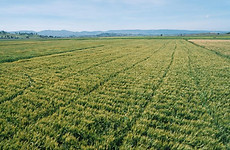
Addis Ababa, July 18, 2026 (FMC) — Former Nigerian President and African Union Special Envoy for the Horn of Africa Olusegun Obasanjo has credited Prime Minister Abiy Ahmed’s wheat self-sufficiency initiative for transforming Ethiopia’s agricultural outlook, saying the achievement presents wider possibilities for Africa’s food security and economic future.
Addressing the opening of Ethiopia’s historic National Dialogue Conference in Addis Ababa, Obasanjo recalled how the Russia-Ukraine war exposed Africa’s vulnerability to external food supply disruptions, particularly the continent’s dependence on wheat imports from abroad.
July 12, 2026 - ethiositer.com
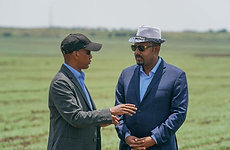
Addis Ababa, July 13, 2026 (FMC) — A Kenyan commentator has pointed to Ethiopia’s Somali Regional State as a development experience that Kenya’s counties can learn from, highlighting the region’s transformation in governance, infrastructure, security, urban development and economic growth.
In an opinion article published by The Star Kenya, columnist Farah Kalmey shared reflections from his visit to Ethiopia’s Somali Region, describing a journey of change that he said offers important lessons for counties seeking to accelerate local development.
July 09, 2026 - ethiositer.com
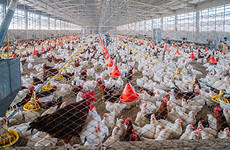
Addis Ababa, July 9, 2026 (FMC) — Ethiopia’s Bounty of the Basket (Yelemat Trufat) initiative is delivering tangible results in advancing the country’s food self-sufficiency and nutritional security goals, the Ministry of Agriculture has announced.
Briefing the media on the implementation of the initiative, State Minister of Agriculture Fikru Regassa said the program is strengthening the country’s economic capacity while supporting ongoing efforts to achieve food sovereignty.
According to the state minister, annual milk production has increased from 7.1 billion liters when the initiative was launched to 15.7 billion liters this year.

July 08, 2026 - ethiositer.com
Addis Ababa, July 8, 2026 (FMC) — Ethiopia’s agricultural transformation is strengthening food security while opening new pathways for export growth, Prime Minister Abiy Ahmed (PhD) said, pointing to rising productivity, expanding market-oriented production and the growing resilience of the sector.
The Prime Minister made the remarks yesterday during the 30th regular session of the House of Peoples’ Representatives, where he reviewed the government’s performance during the 2018 Ethiopian fiscal year.
He said the changes underway in agriculture reflect a broader structural transformation, with the sector increasingly moving beyond traditional production patterns toward higher productivity, diversification and greater self-reliance.
July 02, 2026 - ethiositer.com
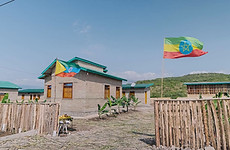
Arba Minch, July 2, 2026 (FMC) — Prime Minister Abiy Ahmed has inaugurated the modern Hamasa Model Village in the South Ethiopia Regional State, developed on 79.4 hectares of land under the Rural Corridor Development Program.
In a social media post, the Prime Minister said the village is equipped with integrated facilities including modern sanitation systems, livestock shelters, vegetable gardens, biogas installations, and beehives, all aimed at improving farmers’ livelihoods and productivity.
He noted that the model village is designed to provide comprehensive services that enhance living standards and support sustainable rural development.

June 30, 2026 - ethiositer.com
Addis Ababa, June 30, 2026 (FMC) — Ethiopia is stepping up efforts to explore carbon market opportunities as part of its broader drive to strengthen sustainable agricultural development, climate resilience, and rural transformation.
The focus emerged during the Second Agriculture Science Seminar Series, jointly organized by the Ethiopian Agricultural Transformation Institute (ATI), the Ethiopian Academy of Sciences (EAS) Agriculture Working Group, in collaboration with the Ministry of Agriculture.
June 26, 2026 - ethiositer.com
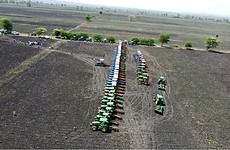
Addis Ababa, June 26, 2026 (FMC) — The Ministry of Agriculture has announced that Ethiopia is targeting 730 million quintals of crop production during the 2026 main agricultural production season, currently at its early growing stage under the main rainy-season farming period.
The announcement was made on Thursday during a press briefing outlining national preparations for the ongoing agricultural production cycle.
The Ministry indicated that 22.3 million hectares of land are planned to be cultivated during the 2026 main production season in order to achieve the national output target.

June 16, 2026 - ethiositer.com
Addis Ababa, June 16, 2026 (FMC) – Ethiopia’s Green Legacy Program has expanded forest cover to 11.2 million hectares over the past seven years, Minister of Agriculture Addisu Arega said.
Speaking at the 2026 Green Legacy planting season launch in Bishoftu, held under the theme “Let Us Plant Hope,” the Minister said the initiative has grown into a defining national effort linking environmental restoration with development priorities since its launch in 2019.
He said this year’s campaign was officially inaugurated by Prime Minister Abiy Ahmed (PhD) at Lake Harsade, with a target of planting eight billion seedlings as Ethiopia continues toward its broader goal of 65 billion trees.

H.E.-Addisu-Arega-Kitessa
Overview of the Ministry of Agriculture
The present day Ministry of Agriculture (MoA) was established in 1907 during the reign of emperor Menelik II.More than a century has been elapsed since agriculture was transformed in to an institution.
